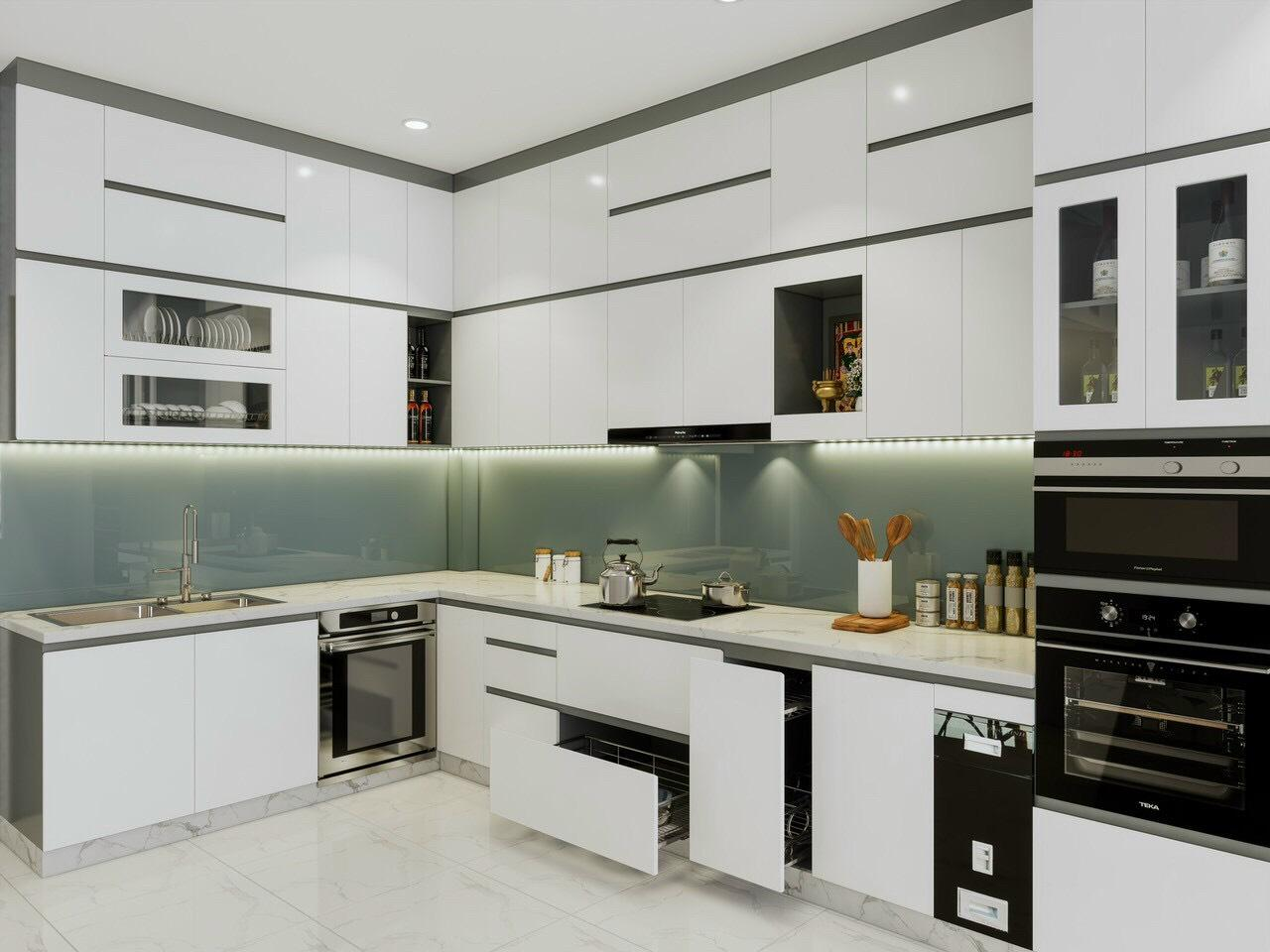
Choosing the right plywood for modular kitchen construction is important for creating cabinets and storage units that are practical, stable and suitable for everyday use. SLE Pune provides modular kitchen and kitchen interior solutions designed around the available space, storage requirements, preferred finishes and project needs.
The right plywood selection depends on where the material will be used, the level of moisture exposure, cabinet construction, design requirements and the overall kitchen environment. From base cabinets and wall units to tall storage and utility areas, plywood can be selected according to the function of each component.
For homeowners planning a new kitchen or renovating an existing one, understanding plywood types can make the material-selection process easier. SLE Pune can help customers evaluate suitable materials and combine them with appropriate laminates, acrylic finishes, hardware, drawers and kitchen storage systems.
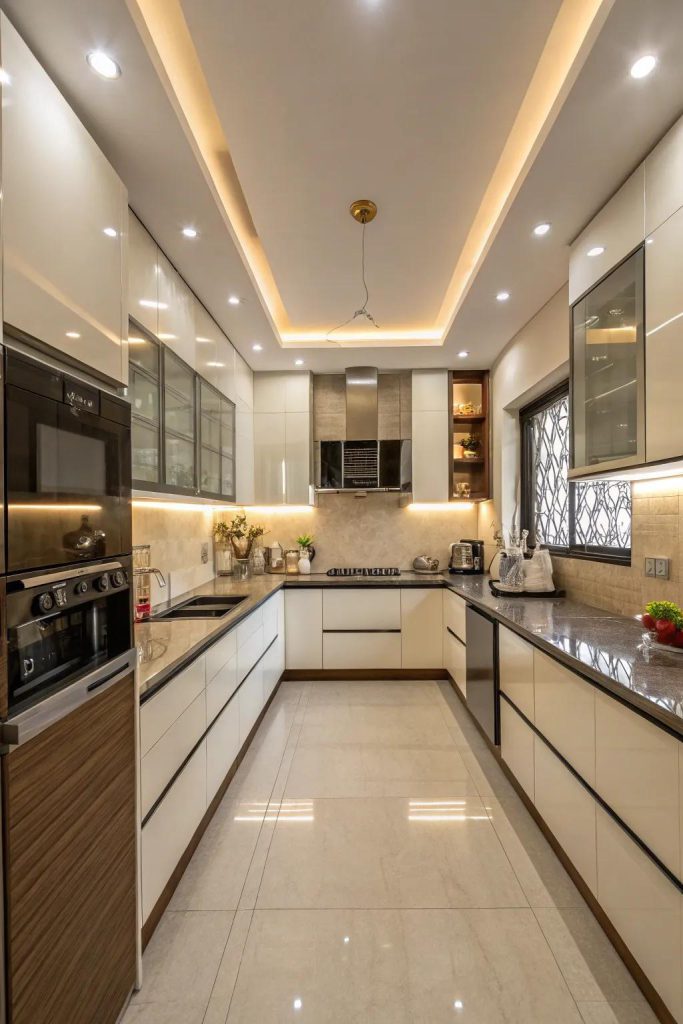
Why Plywood Is Used in Modular Kitchens
Plywood is a commonly considered material for kitchen cabinetry because it is made from layers of wood veneer bonded together. Its layered construction provides a stable base for different cabinet applications when the appropriate grade and thickness are selected.
For a modular kitchen, plywood may be used for cabinet carcasses, shutters, shelves, drawers and other components depending on the design specification.
Important factors to consider include:
- Moisture exposure
- Required thickness
- Cabinet size
- Load requirements
- Edge finishing
- Surface finish
- Hardware compatibility
- Expected usage
- Installation conditions
The correct specification should be selected according to the application rather than choosing a material based only on its name.
Types of Plywood for Modular Kitchen
Different plywood grades can be considered for different kitchen applications. The terminology and specifications should always be checked against the manufacturer’s technical information before purchase.
BWP Plywood for Kitchen
BWP, commonly associated with boiling-water-resistant plywood, is designed for applications where greater resistance to moisture is required. It can be considered for kitchen areas where exposure to water or humidity is a concern.
For example, BWP plywood may be evaluated for base cabinets, sink areas and other locations where moisture management is important.
BWR Plywood for Kitchen
BWR plywood is commonly used where moisture resistance is required but the application may have different performance requirements from BWP-grade material.
The appropriate grade depends on the location within the kitchen, expected exposure and project specification.
Commercial Plywood
Commercial plywood can be considered for applications with lower moisture exposure, depending on its technical specification and intended use.
It is important to distinguish between different plywood products rather than assuming that all commercial plywood has the same properties.
Best Plywood for Modular Kitchen Cabinets
There is no single plywood specification that is automatically suitable for every kitchen. The right choice depends on the cabinet location, moisture exposure, load, design and budget.
For example, the material requirements for a sink cabinet may differ from those of an upper wall cabinet. Similarly, a tall pantry unit may have different structural and storage requirements.
When selecting plywood for modular kitchen cabinets, consider:
- Moisture resistance – Particularly important around sinks and wet areas.
- Thickness – Should be suitable for the intended cabinet component.
- Core quality – Consistent construction is important for cabinet stability.
- Surface preparation – The plywood should be suitable for the selected finish.
- Hardware compatibility – Hinges, drawer systems and other fittings need appropriate fixing support.
- Application – Different parts of the kitchen may require different specifications.
Plywood Kitchen Cabinets and Storage
Kitchen cabinets need to support daily activities while keeping cookware, groceries, appliances and utensils organised.
Plywood can be incorporated into different storage elements such as:
- Base cabinets
- Wall cabinets
- Tall units
- Pantry units
- Corner cabinets
- Open shelves
- Appliance cabinets
- Utility storage
- Drawer systems
- Sink cabinets
The cabinet design should also account for ventilation, plumbing access, appliance dimensions and the available kitchen layout.
Plywood for Kitchen Sink Cabinets
The area below the kitchen sink deserves particular attention because it can experience moisture from plumbing, cleaning and accidental water exposure.
When selecting plywood for a sink cabinet, moisture resistance is an important consideration. Proper sealing, edge treatment, installation and plumbing maintenance also contribute to long-term cabinet performance.
A moisture-resistant material alone cannot compensate for continuous water leakage or poor installation.
Plywood Thickness for Modular Kitchen
Plywood thickness should be selected according to the component being constructed.
Different kitchen elements may require different thicknesses depending on their dimensions, load and construction method. Cabinet carcasses, shutters, shelves and drawer components do not necessarily need identical specifications.
Instead of selecting one thickness for the entire kitchen, the design and manufacturing requirements should be evaluated component by component.
Plywood vs MDF for Modular Kitchen
Plywood and MDF are different engineered wood products and have different characteristics.
Plywood is manufactured using layers of veneer, while MDF is produced from refined wood fibres combined with resin and compressed into panels.
The appropriate material depends on the application, finish, moisture exposure, design and project requirements.
For kitchen cabinetry, material selection can also depend on whether the priority is structural performance, surface finish, cost, machining requirements or moisture resistance.
Plywood vs Particle Board for Kitchen Cabinets
Particle board is manufactured from wood particles bonded together under pressure, while plywood is constructed from veneer layers.
Both materials can be used in furniture applications, but their suitability depends on the product specification and intended environment.
For a kitchen, factors such as moisture exposure, cabinet construction, hardware fixing, load and finish should be considered before selecting the board material.
Plywood Finishes for Modular Kitchens
Plywood provides a suitable substrate for several kitchen finishing options.
Depending on the design, cabinets can be finished with:
- Laminates
- Acrylic
- Veneer
- Paint finishes
- Decorative surfaces
The choice of finish affects the appearance, cleaning requirements, maintenance and overall design character of the kitchen.
For example, acrylic can create a smooth contemporary appearance, while laminates provide a wide range of colours, textures and patterns.
Plywood and Kitchen Hardware
Good cabinet construction also needs compatible hardware.
Depending on the kitchen design, hardware may include:
- Hinges
- Drawer channels
- Tandem drawers
- Bottle pull-outs
- Cutlery organisers
- Corner mechanisms
- Pantry systems
- Lift-up fittings
- Tall-unit accessories
Hardware selection should consider cabinet dimensions, load requirements and frequency of use.
Custom Modular Kitchen Using Plywood
Every kitchen has different dimensions and storage requirements. A customised modular kitchen can be designed around the available wall lengths, window positions, plumbing points, appliances and user preferences.
SLE Pune can plan kitchen components according to the selected layout and storage requirements.
Common layouts include:
- L-shaped kitchens
- Parallel kitchens
- Straight kitchens
- U-shaped kitchens
- Island kitchens where space permits
Material selection can then be coordinated with cabinet design, countertops, finishes, hardware and storage accessories.
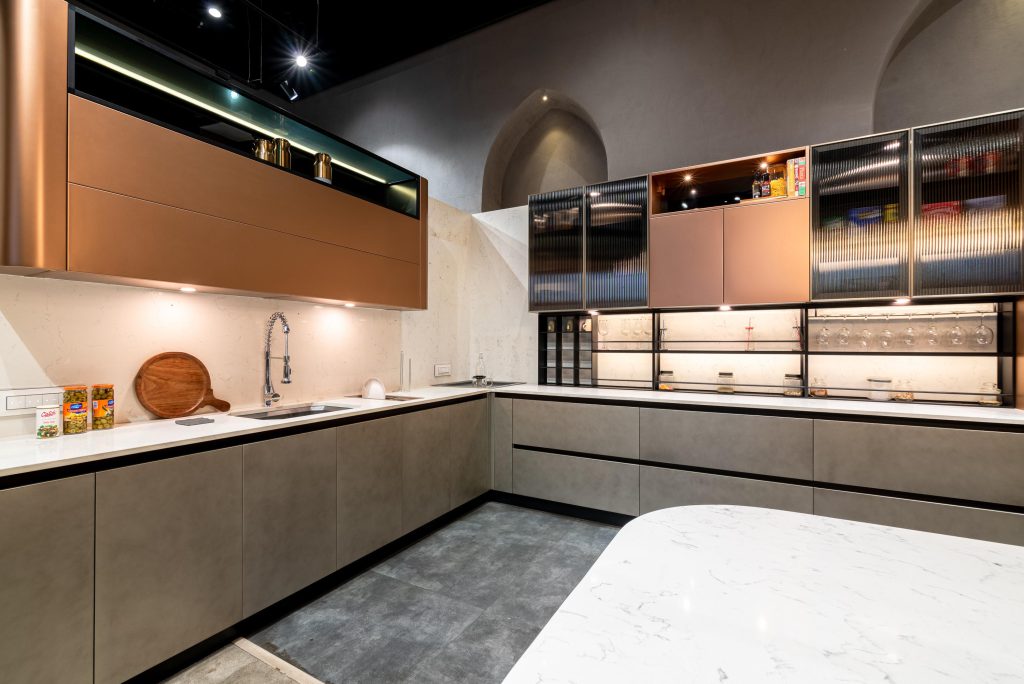
Plywood for Small Modular Kitchens
Small kitchens require careful planning because every cabinet and storage area needs to be used efficiently.
Plywood cabinetry can be designed around compact layouts while incorporating practical storage such as:
- Vertical cabinets
- Tall pantry units
- Corner storage
- Pull-out baskets
- Drawer organisers
- Overhead cabinets
- Appliance storage
The goal is not simply to add more cabinets but to create storage that remains accessible and practical.
Plywood Selection for Kitchen Renovation
If an existing kitchen is being renovated, plywood may be considered for replacing damaged or outdated cabinet components.
A renovation assessment can determine whether the existing structure can be retained or whether new cabinets are more appropriate.
Kitchen renovation may involve:
- Cabinet replacement
- Storage upgrades
- New shutters
- Drawer upgrades
- Hardware replacement
- Countertop changes
- Layout improvements
- Lighting updates
- Finish replacement
SLE Pune can help plan renovation requirements based on the existing kitchen and desired improvements.
How SLE Pune Helps With Kitchen Material Selection
Selecting plywood is only one part of planning a modular kitchen. Cabinet design, storage, finishes, hardware and installation all need to work together.
SLE Pune focuses on practical kitchen planning by considering:
- Available space
- Kitchen layout
- Storage requirements
- Cabinet configuration
- Material selection
- Surface finishes
- Hardware
- Appliances
- Installation requirements
This approach helps create a kitchen that is organised around the way the household uses the space.
Our Modular Kitchen Process
1. Consultation
Discuss your kitchen requirements, preferred design style, storage needs and budget considerations.
2. Site Measurement
Measure the available kitchen space and identify walls, windows, doors, plumbing and electrical points.
3. Layout Planning
Develop a suitable kitchen layout based on the available space and workflow.
4. Material Selection
Discuss plywood specifications, finishes, countertops, hardware and storage accessories according to the project.
5. Design Confirmation
Finalise cabinet configuration, finishes, storage systems and other important design elements.
6. Manufacturing
Approved components are prepared according to the selected design and specifications.
7. Installation
Cabinet components, hardware and accessories are installed at the project site.
8. Final Inspection
The completed kitchen is checked for alignment, functionality, finishing and hardware operation.
What Should You Check Before Buying Plywood for a Modular Kitchen?
Before selecting plywood, check its technical specifications, grade, thickness, intended application and manufacturer information.
You should also consider:
- Moisture exposure
- Cabinet location
- Required load capacity
- Surface finish
- Edge treatment
- Hardware fixing
- Manufacturer specifications
- Project budget
Avoid choosing plywood solely because it is labelled as “waterproof” or “premium.” The actual product specification and intended application are more important.
AEO Questions About Plywood for Modular Kitchens
What is the best plywood for a modular kitchen?
The appropriate plywood depends on the kitchen component and environmental conditions. Moisture-resistant grades may be considered for areas exposed to humidity or water, while other areas may have different material requirements.
Is BWP plywood suitable for kitchen cabinets?
BWP plywood can be considered for kitchen cabinets where higher moisture resistance is required. The exact product specification should be checked before selection.
Is plywood good for modular kitchen cabinets?
Plywood can be used for modular kitchen cabinets when the appropriate grade, thickness and construction method are selected for the application.
What plywood is suitable for a kitchen sink cabinet?
A moisture-resistant plywood specification can be considered for sink cabinets because this area is more exposed to water. Proper sealing, edge treatment and plumbing installation are also important.
What thickness of plywood is used for modular kitchens?
The required thickness depends on the cabinet component, dimensions, load and construction method. Different parts of a kitchen may use different thicknesses.
Is plywood better than MDF for a modular kitchen?
Plywood and MDF have different characteristics. The better option depends on the application, moisture exposure, finish, structural requirements and project specifications.
How much does plywood for a modular kitchen cost?
The cost depends on plywood grade, thickness, brand, quantity, cabinet design, finish and overall kitchen requirements. A project-specific quotation provides a more meaningful estimate than a generic price.
Can plywood be used for a kitchen renovation?
Yes. Plywood can be considered when replacing or rebuilding cabinet components during a kitchen renovation, depending on the condition and requirements of the existing kitchen.
Address: Sukhasagar Rd, Sai Nagar, Shatrunjay Nagar, Kondhwa, Pune, Maharashtra 411048
Phone: 093724 40445
Open · Closes 10:30 pm
Delivery: Ends soon: 6 pm · Starts 9 am Wed