Introduction to Modern Modular Kitchens
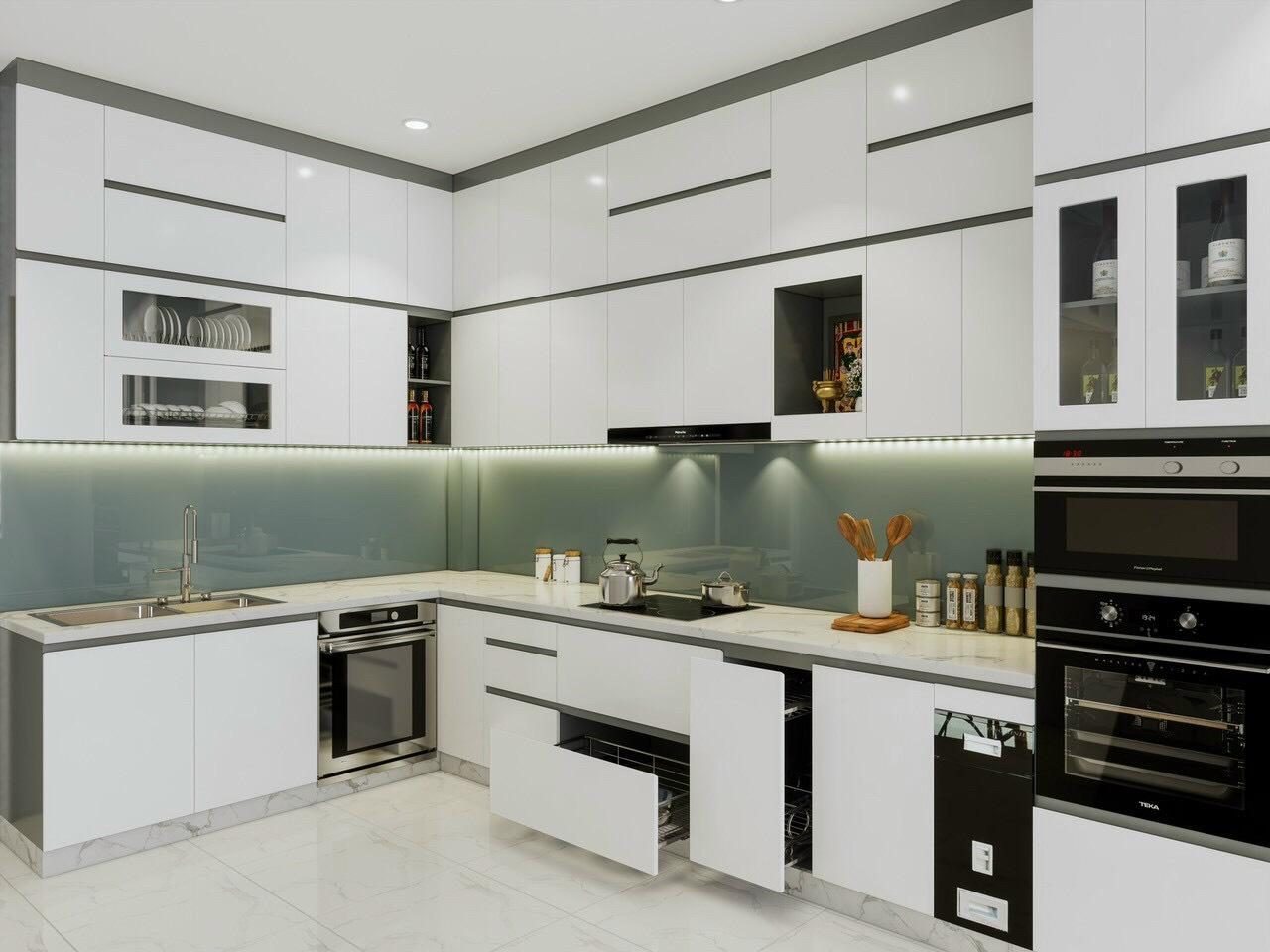
A modern modular kitchen is a contemporary kitchen design made up of pre-manufactured cabinets, drawers, shelves, storage units, countertops and other kitchen components. These individual modules are designed according to the available kitchen space and assembled together to create a functional, stylish and organised cooking area.
Modern modular kitchens combine beauty, convenience, technology and smart storage solutions. Unlike traditional kitchens, where cabinets and storage units are usually constructed directly at the site, modular kitchens use factory-made units that can be installed, removed, replaced or rearranged when required.
Today, modular kitchens have become an important part of modern homes because people want kitchens that are attractive, easy to maintain, space-saving and comfortable to use.
Main Features of Modern Modular Kitchens
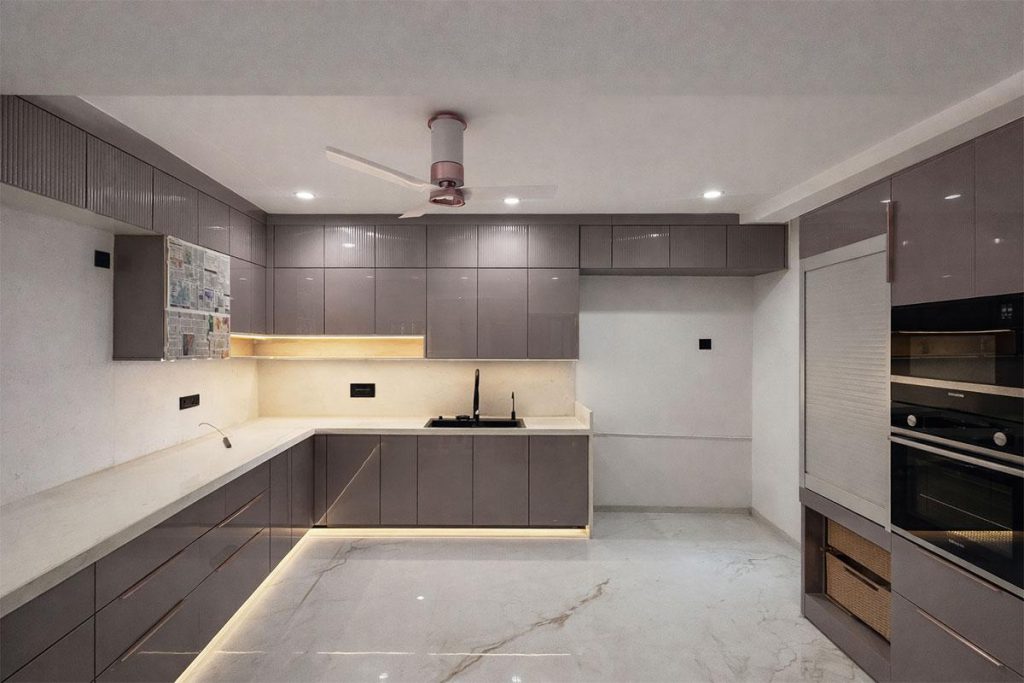
Modern modular kitchens offer several features that make cooking and kitchen management easier.
- Modular cabinet system: Cabinets are manufactured in standard or customised sizes and assembled according to the kitchen layout.
- Smart storage solutions: Pull-out baskets, drawer organisers, corner units and tall storage cabinets help utilise every available space.
- Modern appearance: Simple designs, smooth finishes, clean lines and attractive colour combinations create an elegant look.
- Easy maintenance: Smooth surfaces and organised storage make cleaning and maintaining the kitchen easier.
- Efficient space utilisation: Every corner and unused area can be designed for practical storage.
- Customised designs: Homeowners can select colours, materials, finishes, accessories and layouts according to their preferences.
- Durable materials: Quality plywood, MDF, HDHMR, laminates and other materials can provide long-lasting performance when selected appropriately.
- Modern appliances: Built-in ovens, microwaves, dishwashers, chimneys and hobs can be integrated into the kitchen design.
- Better organisation: Separate spaces can be provided for utensils, groceries, appliances, spices and cooking essentials.
- Flexible installation: Individual modules can be repaired, replaced or upgraded without reconstructing the entire kitchen.
Materials Used in Modern Modular Kitchens
Choosing the right material is essential because kitchen cabinets are exposed to moisture, heat, stains and regular usage.
| Material | Main characteristics |
|---|---|
| Plywood | Strong and suitable for cabinet construction |
| MDF | Smooth surface, suitable for decorative finishes |
| HDHMR | Higher density and improved moisture resistance compared with standard MDF |
| Particle board | Economical option for light-duty applications |
| Stainless steel | Durable, hygienic and moisture-resistant |
| Aluminium | Lightweight and corrosion-resistant |
| Solid wood | Natural appearance and premium finish |
Important considerations:
- Select moisture-resistant materials for sink and plumbing areas.
- Use good-quality edge banding to protect exposed board edges.
- Choose materials according to your budget and expected kitchen usage.
- Ensure that the cabinet structure and hardware are suitable for the weight they will carry.
- Check the manufacturer’s specifications rather than assuming all boards have the same water resistance.
Important Components of a Modern Modular Kitchen
A modular kitchen consists of several individual components that work together to create a functional space.
A. Base Cabinets
- Installed below the kitchen countertop.
- Used for storing heavy utensils, cookware and kitchen equipment.
- Can include drawers, shutters and pull-out baskets.
- Designed to provide easy access to frequently used items.
B. Wall Cabinets
- Installed above the countertop.
- Used for storing plates, glasses, cups and lightweight kitchen items.
- Help maximise vertical storage space.
- Available with hinged, lift-up and sliding shutters.
C. Tall Units
- Extend vertically from the floor towards the ceiling.
- Used for storing groceries, appliances and large kitchen items.
- Can include pantry pull-outs and internal shelves.
- Help keep the kitchen organised.
D. Corner Units
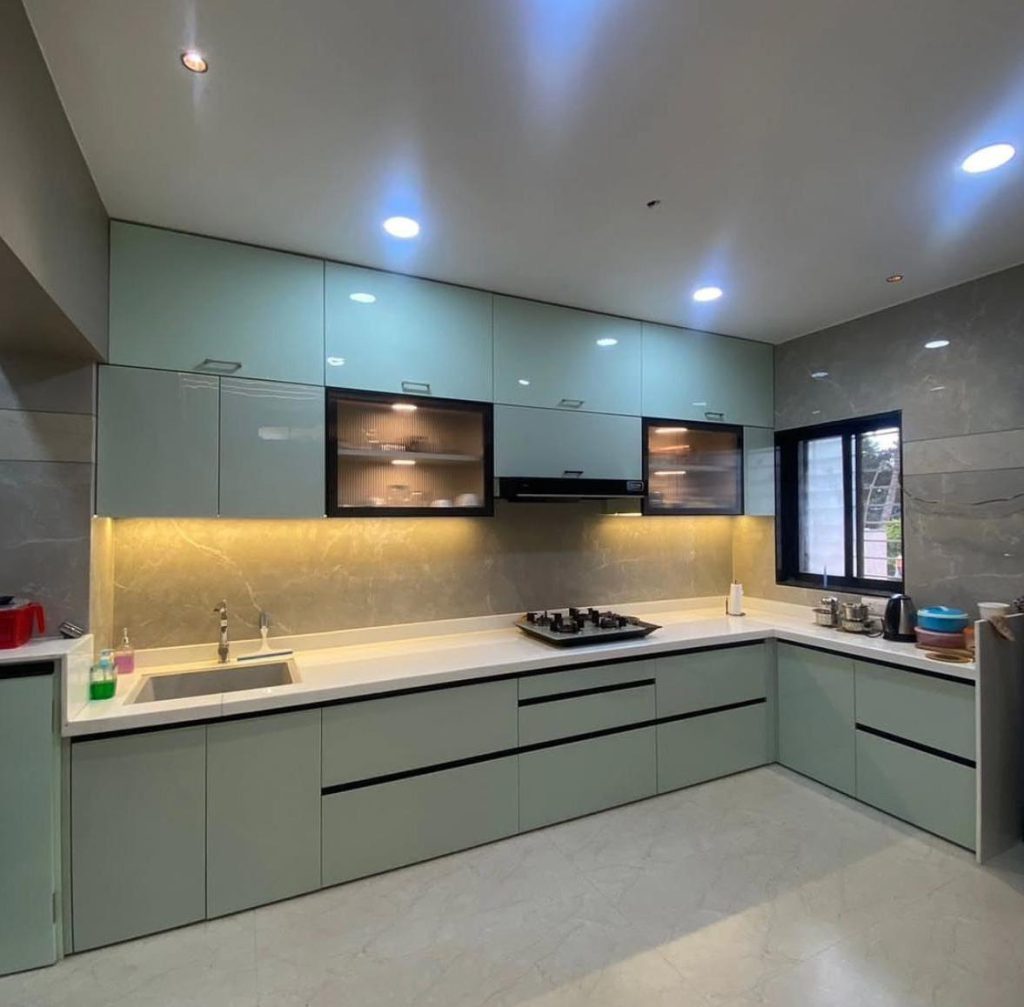
- Designed to utilise difficult-to-access corner spaces.
- Can include magic corners, carousel baskets and swing-out mechanisms.
- Reduce unused storage areas.
E. Drawers and Organisers
- Used for storing spoons, knives, plates and cooking accessories.
- Include cutlery trays and adjustable dividers.
- Help maintain an organised kitchen.
F. Kitchen Countertops
- Provide a working surface for food preparation and cooking activities.
- Common materials include granite, quartz and solid surfaces.
- Should be durable, easy to clean and suitable for kitchen usage.
G. Backsplash
- Installed on the wall behind the cooking and washing areas.
- Protects walls from oil splashes, water and stains.
- Common materials include tiles, glass and stone.
Smart Storage Solutions in Modern Modular Kitchens
Smart storage is one of the most important aspects of contemporary kitchen design.
- Magic corner units: Make corner cabinet storage more accessible.
- Pull-out pantry units: Provide organised storage for groceries and food containers.
- Cutlery organisers: Keep spoons, forks and knives separated.
- Bottle pull-outs: Provide storage for oil bottles, sauces and condiments.
- Thali baskets: Designed for storing plates and traditional Indian thalis.
- Plate racks: Keep plates organised and easily accessible.
- Tandem drawers: Provide convenient storage for utensils and cookware.
- Under-sink organisers: Make use of the space around plumbing.
- Overhead cabinets: Provide additional storage for less frequently used items.
- Corner carousel units: Allow easier access to items stored in corner cabinets.
- Appliance garages: Keep small appliances organised and out of sight.
Modern Colour Combinations for Modular Kitchens
Colour selection plays an important role in creating an attractive kitchen interior.
| Colour combination | Overall appearance |
|---|---|
| White and wood | Warm, clean and elegant |
| Grey and white | Modern and sophisticated |
| Black and gold | Luxurious and dramatic |
| Beige and cream | Soft and peaceful |
| Navy blue and white | Stylish and contemporary |
| Olive green and wood | Natural and refreshing |
| Charcoal grey and walnut | Rich and premium |
| Pastel pink and white | Light and attractive |
Tips for selecting kitchen colours:
- Choose lighter colours for compact kitchens.
- Use contrasting shades to create visual interest.
- Combine natural wood textures with neutral colours.
- Avoid using too many strong colours in a small kitchen.
- Consider the colour of the flooring, walls and countertop.
- Select finishes that are easy to clean and maintain.
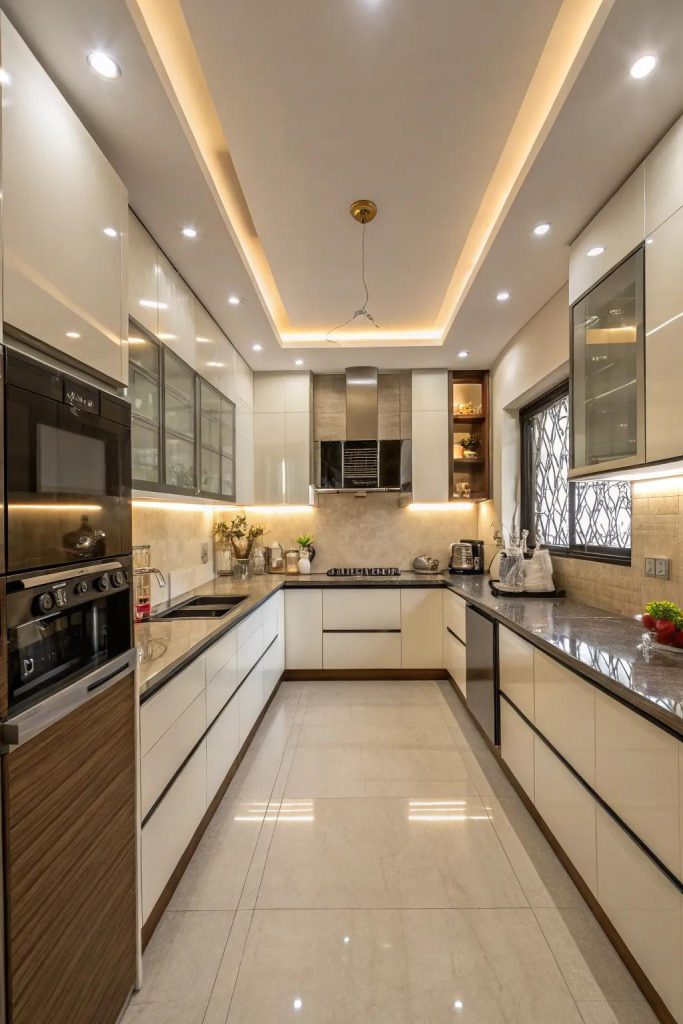
Modern Kitchen Appliances and Accessories
Modern modular kitchens can accommodate several advanced appliances that make daily cooking more convenient.
- Chimney: Removes smoke, grease and cooking odours.
- Built-in hob: Provides an integrated cooking arrangement.
- Built-in oven: Used for baking, roasting and grilling.
- Microwave oven: Useful for reheating and cooking.
- Dishwasher: Helps automate dishwashing.
- Refrigerator: Provides food preservation and storage.
- Water purifier: Provides purified drinking water.
- Built-in waste bins: Help maintain cleanliness.
- Under-cabinet lighting: Improves visibility on countertops.
- Soft-close hinges: Prevent cabinet doors from slamming.
- Drawer channels: Provide smooth opening and closing.
- Lift-up mechanisms: Make overhead cabinets easier to access.
Lighting Design in Modern Modular Kitchens
Lighting is important for both functionality and aesthetics.
There are three major types of kitchen lighting:
- Ambient lighting: General lighting that illuminates the entire kitchen.
- Task lighting: Focused lighting for cooking, chopping and cleaning activities.
- Accent lighting: Decorative lighting used to highlight cabinets, shelves and design features.
Additional lighting ideas:
- LED strip lights below wall cabinets.
- Recessed ceiling lights.
- Pendant lights above kitchen islands.
- Internal cabinet lighting.
- Profile lights in open shelves.
- Under-counter illumination.
A good lighting plan improves visibility, creates a welcoming atmosphere and makes the kitchen more comfortable to use.
1. What is a modern modular kitchen?
A modern modular kitchen is a kitchen designed using individual factory-made cabinets, drawers, shelves and storage units that are assembled according to the available space and requirements.
2. What are the different types of modular kitchens?
The main types are:
- Straight kitchen.
- Parallel kitchen.
- L-shaped kitchen.
- U-shaped kitchen.
- Island kitchen.
- G-shaped kitchen.
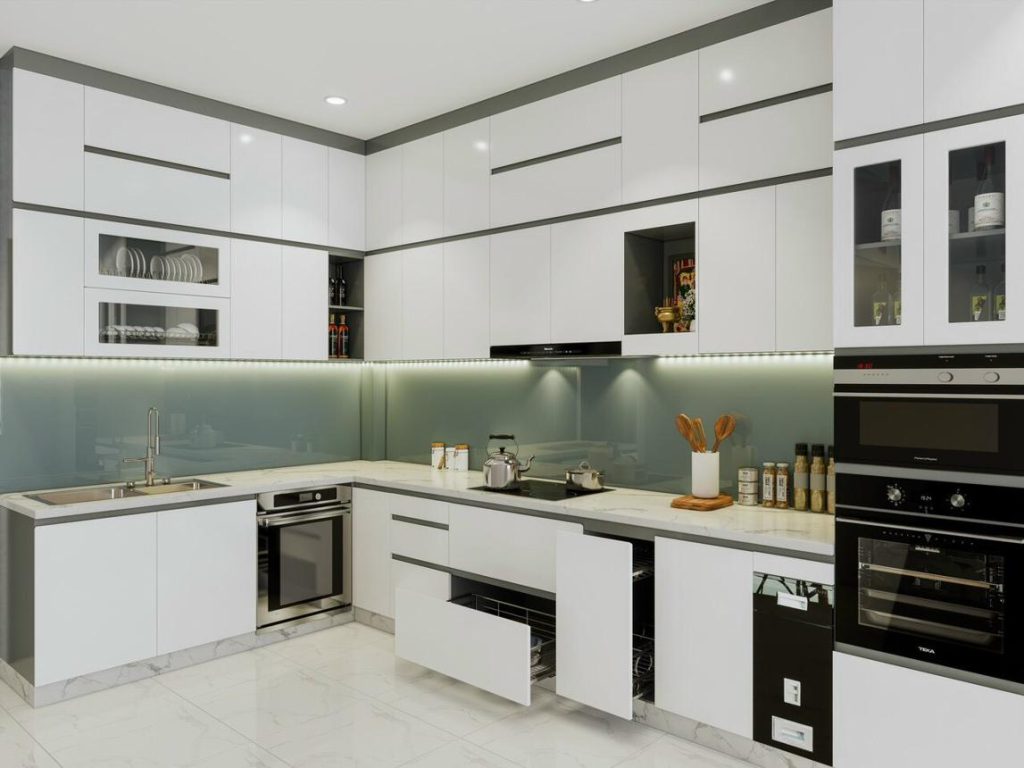
3. Which modular kitchen layout is best for small homes?
A straight or L-shaped kitchen is generally suitable for small homes because it uses space efficiently and provides a comfortable working area.
4. Which material is best for modular kitchen cabinets?
BWR or BWP-grade plywood is commonly preferred for durable kitchen cabinetry, while HDHMR and other engineered boards can also be considered depending on the location, specifications and budget.
5. Which finish is best for a modular kitchen?
Laminate is a practical option for many households because it is available in different designs, is relatively economical and is easy to maintain. Acrylic and PU finishes are popular premium alternatives.